
Website for manufacturing company Manesar
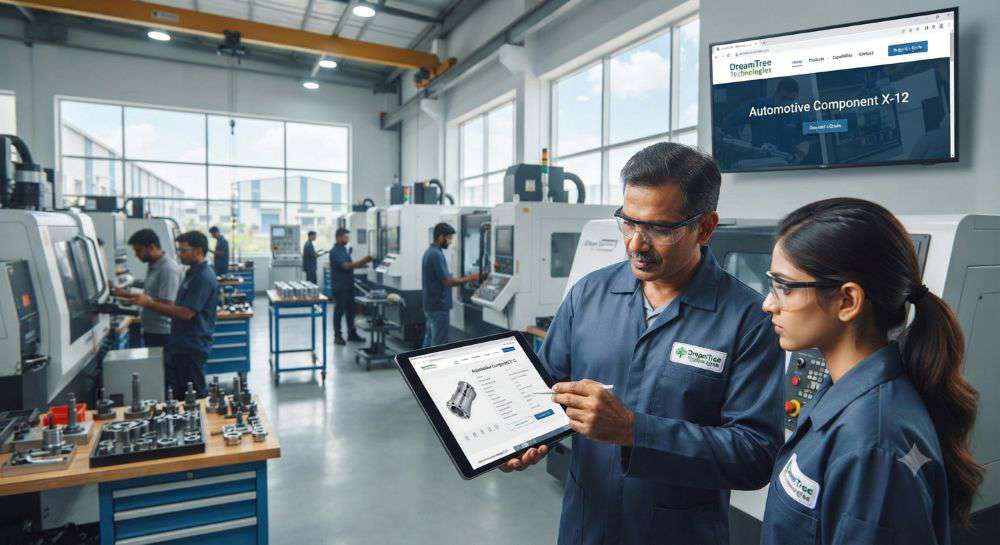
For manufacturing businesses operating across the industrial expanse of IMT Manesar, Gurugram, and the wider Haryana region, a digital presence has evolved from a secondary brochure into a core operational asset. Whether you run an auto-component plant, an engineering workshop, a heavy machinery assembly line, or an industrial supply business, your enterprise operates in a competitive B2B landscape. When potential domestic and international buyers, procurement managers, and tier-one distributors search for industrial partners, they rarely rely solely on word-of-mouth. They examine your digital footprint to evaluate your scale, capabilities, and reliability.
Yet, many manufacturing firms still rely on basic, outdated static pages that fail to reflect their true shop-floor capabilities. A strategically structured website for manufacturing company in Manesar acts as a 24/7 sales representative, showcasing your products, infrastructure, and engineering expertise.
Why Manufacturing Companies in Manesar Need a Professional Website
A professional industrial website serves multiple strategic functions across your business lifecycle:
- First Impression: B2B buyers and corporate procurement teams often evaluate your legitimacy, organization, and professional standards online before ever making a phone call or scheduling a plant visit.
- B2B Credibility: Presenting certifications, quality control procedures, and technical specifications builds trust with industrial partners who cannot afford supplier failure.
- Product Discovery: Clear categorization allows engineers, designers, and buyers to find exact part numbers, material specifications, and product variants quickly.
- Lead Generation: Structured RFQ (Request for Quotation) and enquiry forms convert casual technical researchers into actionable sales leads.
- Sales Support: Your sales team can share specific product links, downloadable technical datasheets, and case studies directly with prospective clients during negotiations.
- Distributor Communication: A centralized web platform helps channel partners, dealers, and international distributors access up-to-date product manuals, marketing assets, and inventory updates.
- Search Visibility: Optimizing your digital assets ensures that when buyers search for specific manufacturing or machining capabilities, your business appears prominently.
What Makes a Manufacturing Website Different From a Normal Business Website?
A standard retail or service website focuses on emotional branding, aesthetic imagery, and consumer checkout flows. In contrast, an industrial manufacturing website design must address the rational, specification-driven requirements of B2B decision-makers.
Key differences include:
- Detailed Product Information: Focuses on technical data, material grades, dimensions, tolerances, and applications rather than generic marketing text.
- Manufacturing Capabilities: Highlights plant machinery, production capacity, tooling capabilities, and custom fabrication options.
- Quality & Compliance: Prominently displays quality assurance frameworks, testing procedures, and industry certifications.
- RFQ Workflows: Replaces simple contact forms with detailed RFQ mechanisms that capture specific order volumes, technical drawings, and delivery timelines.
- Technical Documentation: Provides downloadable datasheets, CAD drawings, user manuals, and material safety data sheets (MSDS).
10 Essential Features of a Website for a Manufacturing Company
1. Clear Company Profile
- Why it matters: Buyers want to know who they are dealing with—your history, ownership, scale of operations, and core mission.
- What should be included: Brief company history, core competencies, geographic reach, and leadership overview.
- How it helps: Establishes instant corporate legitimacy and reassures new clients of your stability.
2. Product and Service Catalogue
- Why it matters: This is the core of your industrial website. Visitors need to see what you make or process.
- What should be included: Hierarchical product categories, individual product pages, part numbers, and brief descriptions.
- How it helps: Facilitates smooth product discovery for engineers and procurement specialists.
3. Manufacturing Capabilities
- Why it matters: B2B buyers look for specific production capacities, machining tolerances, and tooling availability.
- What should be included: Details on CNC machining, fabrication lines, assembly capacities, testing facilities, and raw material handling.
- How it helps: Proves you have the physical infrastructure to execute large or complex orders.
4. Industrial Applications and Industries Served
- Why it matters: Different sectors (automotive, aerospace, medical, electrical, construction) have unique technical standards.
- What should be included: Dedicated sections outlining the industries you supply and specific real-world applications of your products.
- How it helps: Helps buyers immediately understand if your components match their specific sector requirements.
5. Certifications and Quality Information
- Why it matters: Quality compliance is non-negotiable in modern manufacturing and supply chains.
- What should be included: ISO certifications, IATF standards, CE markings, quality policy statements, and inspection protocols.
- How it helps: Mitigates risk for procurement managers looking for certified, audit-ready vendors.
6. Infrastructure and Facility Showcase
- Why it matters: Visual proof of your plant, shop floor, and warehousing infrastructure builds confidence.
- What should be included: High-resolution photographs of your Manesar or regional facility, shop floor zones, and warehousing.
- How it helps: Demonstrates operational scale and transparency to clients who cannot visit immediately.
7. RFQ / Enquiry System
- Why it matters: General contact forms are inadequate for industrial orders requiring custom specifications.
- What should be included: Structured RFQ forms allowing specification inputs, file uploads (PDFs, CAD files, drawings), and volume requirements.
- How it helps: Streamlines the sales intake process and provides your engineering and sales teams with exact requirement details.
8. Technical Documents and Downloads
- Why it matters: Engineers and technical buyers require deep documentation before approving a vendor.
- What should be included: Downloadable product brochures, specification sheets, material grade charts, and installation guides.
- How it helps: Empowers technical evaluators with immediate, self-serve data.
9. Case Studies and Project Experience
- Why it matters: Demonstrating past success validates your technical expertise and problem-solving track record.
- What should be included: Overview of challenging projects solved, custom manufacturing solutions delivered, and client success narratives.
- How it helps: Reduces perceived risk for prospective clients considering a new manufacturing partner.
10. Strong Contact and Sales CTAs
- Why it matters: Clear calls-to-action guide users on their next step without friction.
- What should be included: Accessible phone numbers, business email addresses, plant addresses, and clear "Request Quote" buttons.
- How it helps: Increases overall conversion rates by making communication effortless.
How a Manufacturing Website Can Generate More B2B Enquiries
A manufacturing website should be structured to capture high-intent traffic and convert it into commercial inquiries. Practical lead-generation methods include:
- Strategic RFQ Forms: Placing "Request a Quote" buttons directly on product and category pages.
- Sample Request Options: Allowing prospective clients to request material samples or product prototypes where applicable.
- Catalog Downloads: Offering comprehensive product catalogues in exchange for business contact details.
- Direct Inquiry Channels: Integrating click-to-call, business WhatsApp links, and direct sales email routing for urgent orders.
When partnering with an experienced website development company in Manesar, ensuring these conversion pathways are smoothly integrated into your site architecture is vital for long-term sales success.
What Content Should a Manufacturing Company Put on Its Website?
Content on a manufacturing website must bridge technical depth and commercial clarity. Key content assets include:
- About Us: Company history, vision, and core team profiles.
- Core Products & Specifications: Detailed breakdowns of dimensions, materials, and tolerances.
- Manufacturing Infrastructure: Machinery lists, plant capacities, and tooling details.
- Quality Assurance: Inspection processes, testing equipment, and compliance certificates.
- Resources & Blog: Technical guides, material comparison charts, and industry updates.
- FAQs: Answers to common lead-time, MOQ (Minimum Order Quantity), shipping, and customization questions.
Manufacturing Website Design for Different Types of Businesses
Different industrial sectors require tailored presentation structures:
- Automotive & Auto-Component Suppliers: Focus on IATF standards, precision machining tolerances, tier-supply experience, and bulk production capacity.
- Engineering & Machinery Manufacturers: Highlight mechanical designs, custom fabrication capabilities, installation support, and spare parts availability.
- Industrial Equipment & Tooling: Emphasize durability, technical specifications, performance metrics, and maintenance guides.
- Plastic & Packaging Companies: Showcase material grades, food-grade compliances, eco-friendly options, and customization flexibility.
- Chemical & Process Industries: Feature safety data sheets (MSDS), purity levels, packaging formats, and regulatory compliance.
SEO for Manufacturing Company Websites
Many industrial websites suffer from low traffic because they only target brand-name searches. Effective SEO services in Manesar focus on product and application-level search intent. Key optimization areas include:
- Product-Specific Keywords: Optimizing pages for specific part names, material types, and manufacturing techniques rather than vague industry terms.
- Technical SEO: Ensuring clean HTML code, fast loading speeds (Core Web Vitals), and secure HTTPS implementation.
- Structured Content: Utilizing schema markup for products and organizations so search engines understand your technical offerings.
- Local & Regional SEO: Capturing regional B2B search traffic looking for manufacturers based in industrial clusters like IMT Manesar and Gurugram.
How to Structure a Manufacturing Website
A clean, logical sitemap ensures both users and search engines navigate your content effortlessly. A standard structure includes:
- Home
- About Us
- Products (Categorized by type or industry)
- Manufacturing Capabilities
- Infrastructure & Facilities
- Quality & Certifications
- Case Studies / Projects
- Resources (Brochures, Downloads)
- Blog
- Contact Us
- Request a Quote (RFQ)
B2B Features That Can Improve a Manufacturing Website
To enhance user experience and operational efficiency, consider integrating advanced B2B features:
- Advanced Product Filtering: Allowing users to filter product catalogues by material, size, application, or industry.
- CRM Integration: Connecting website RFQ forms directly with your Customer Relationship Management system to track leads automatically.
- Quotation Workflows: Multi-step enquiry forms that gather precise technical parameters before reaching the sales team.
- Distributor Portals: Password-protected areas where authorized dealers can access wholesale price lists, inventory updates, and marketing materials.
How Much Does a Manufacturing Company Website Cost?
Website design pricing varies by scope and functionality. Rather than a fixed market rate, project costs depend on:
- Number of pages and depth of the product catalogue.
- Custom UI/UX design requirements.
- Complexity of RFQ and enquiry workflows.
- Integration with external systems (CRM, ERP, inventory databases).
- Multilingual support for international export markets.
- Professional facility photography and video production.
- Ongoing maintenance and SEO scope.
Different tiers range from basic brochure websites for small fabricators to advanced custom B2B manufacturing platforms with extensive product databases and secure portals.
Mistakes Manufacturing Companies Should Avoid
- Relying entirely on a brief company profile with no product details.
- Using generic stock imagery of office workers instead of real factory floors and manufactured products.
- Omitting technical specifications, dimensions, and material grades.
- Failing to include clear RFQ or enquiry call-to-action buttons.
- Building a slow, non-responsive website that breaks on mobile devices.
- Neglecting SEO foundations, making it impossible for buyers to find the site via search engines.
- Hiding contact details or physical addresses.
- Failing to clarify domain and source code ownership after development.
Why Mobile Optimization Matters for Manufacturing Websites
Plant managers, field engineers, procurement officers, and corporate buyers increasingly review supplier websites on tablets and smartphones while on the shop floor or traveling between facilities. A fully responsive manufacturing website ensures:
- Product catalogues and tables adjust smoothly to smaller screens.
- Enquiry forms remain simple to fill out on mobile devices.
- Click-to-call functionality allows instant connection with the sales office.
- Fast rendering speeds prevent high bounce rates.
Why Real Factory, Product, and Team Photography Matters
Generic stock photographs of sleek corporate offices do not resonate with industrial buyers. Utilizing genuine, high-quality photographs of your actual Manesar manufacturing plant, CNC machinery, assembly lines, quality testing labs, and engineering team builds immediate authenticity and trust. Authentic imagery reassures buyers of your operational reality.
How a Manufacturing Website Supports Sales Teams
Your website should be positioned as a primary digital sales enablement tool. When speaking with prospective clients, your sales team can direct them to specific URL links containing:
- Detailed technical data sheets and CAD drawings.
- Relevant case studies and past project profiles.
- Compliance certificates and quality assurance documents.
- Streamlined RFQ intake forms to formalize discussions.
Why Consider DreamTree Technologies?
For manufacturing businesses seeking a reliable digital partner, DreamTree Technologies brings extensive industry experience to the table. Located nearby in Sector 82, Gurugram, Haryana, DreamTree Technologies serves growing industrial enterprises, engineering firms, and manufacturing units across Manesar and IMT Manesar.
With over 17 years of industry experience, DreamTree Technologies provides a comprehensive suite of digital solutions, including:
- Website Design & Development
- Search Engine Optimization (SEO)
- Custom Software Development
- CRM, Billing, and Inventory Software Solutions
Our team focuses on building secure, scalable, and conversion-focused digital platforms tailored to your operational needs.
Manufacturing Website Checklist
- [ ] Mobile responsive layout
- [ ] Fast loading speed optimization
- [ ] Clear company profile and history
- [ ] Structured product catalogue
- [ ] Detailed product specifications and material grades
- [ ] Manufacturing capabilities and machinery details
- [ ] Industries served and applications overview
- [ ] Quality standards and compliance certifications
- [ ] Factory and facility information with real imagery
- [ ] Structured RFQ / Enquiry form
- [ ] Complete contact information and location details
- [ ] SEO-ready structural foundation
- [ ] Web analytics tracking setup
- [ ] Secure SSL implementation
- [ ] Regular backup and maintenance plan
Final Thoughts
A modern manufacturing website should function seamlessly as your corporate identity, digital product catalogue, sales-support tool, and lead-generation channel. By prioritizing technical accuracy, clear product categorization, robust RFQ workflows, and authentic facility imagery, your business can build lasting credibility with domestic and international B2B buyers.
If your manufacturing business in Manesar is planning a new website or looking to upgrade an existing digital presence, get in touch with our team today to discuss your project requirements.
Frequently Asked Questions
What should a manufacturing company website include? A manufacturing website should include a clear company profile, a detailed product catalogue with technical specifications, manufacturing capabilities, industries served, quality certifications, facility showcases, RFQ forms, and downloadable technical documentation.
How much does a manufacturing website cost? Pricing depends on the number of pages, product catalogue complexity, custom UI/UX design, RFQ workflow requirements, integrations with CRM systems, and SEO scope. Costs vary from basic brochure sites to advanced B2B platforms.
How long does it take to build a manufacturing website? Timelines vary based on project complexity. A standard corporate manufacturing website typically takes 3 to 6 weeks, while extensive platforms with complex product databases require additional development and testing time.
Should a manufacturing website have a product catalogue? Yes. A structured product catalogue is essential for helping engineers, buyers, and distributors find exact part numbers, material specs, and product variants quickly.
How can a manufacturing website generate B2B enquiries? By incorporating dedicated RFQ forms on product pages, offering downloadable catalogues, providing clear contact options, and outlining custom manufacturing inquiry pathways.
Is SEO important for manufacturing companies? Yes. Product-focused SEO ensures that when procurement managers and engineers search for specific components, machining capabilities, or industrial suppliers, your website appears in search results.
Should we add our factory and product photos? Yes. Real photographs of your Manesar plant, machinery, shop floor, and manufactured parts build genuine credibility and trust far better than generic stock images.
Can a manufacturing website include an RFQ form? Yes. An RFQ form allows potential buyers to submit specific order volumes, technical drawings, material requirements, and target timelines directly to your sales team.
Can a website connect with CRM or ERP software? Yes. Custom web development allows your website's enquiry and RFQ forms to integrate seamlessly with your internal CRM or inventory systems.
Can DreamTree develop a website for a manufacturing company in Manesar? Yes. Operating from Gurugram, DreamTree Technologies provides website design, development, SEO, and custom software solutions for manufacturing businesses across Manesar and IMT Manesar.
5. Suggested Internal Links
Need a Professional Website?
Let's build a fast, modern and SEO-friendly website for your business.
Get Free Consultation